How-To
Winching 101: How to Recover Your Rig Safely
By Off-Road Gear Guys · 8 min read
A stuck rig on the trail is more than an inconvenience — it's a moment where good technique keeps everyone safe. A winch stores enormous energy under load, and a cable that fails or an anchor that gives way can turn a routine recovery into a serious injury. Learning to winch properly protects you, your passengers, and your gear, so you get back on the trail with confidence instead of hoping for the best.
Gear Up Before You Pull
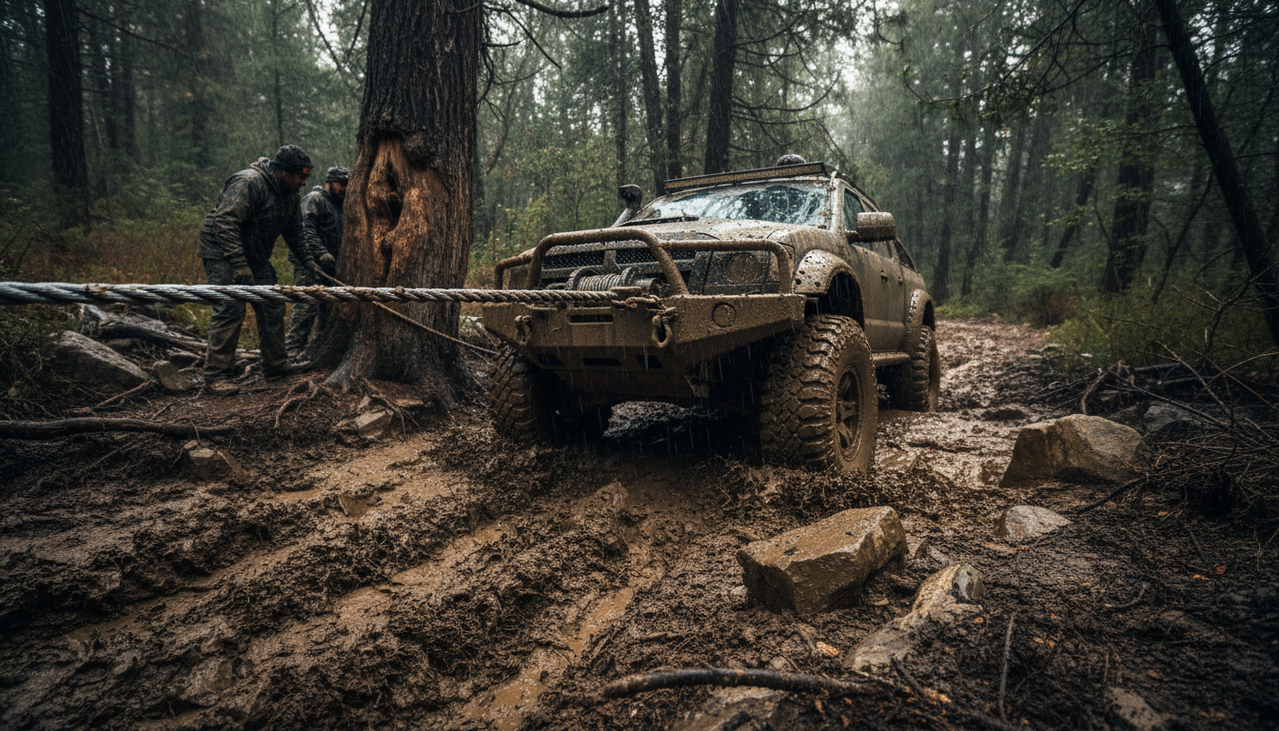
Before you hook up, make sure your recovery kit is complete and in good shape. Inspect your winch line end to end for frays, kinks, or broken strands — a compromised line is the fastest route to failure. Keep a snatch block handy to double your pulling power or change the direction of a pull, and always use a tree saver strap instead of wrapping bare cable around an anchor, which damages both the tree and your line. Finally, never skip your gloves; they protect your hands from burrs and heat while you handle the cable under tension.
Step-by-Step Recovery
Assess the situation. Understand why you're stuck and where the vehicle needs to go before touching the winch.
Choose an anchor point. Pick a solid tree, rock, or second vehicle strong enough to hold the load.
Rig the winch. Attach your tree saver and shackle, spool out enough line, and confirm every connection is secure.
Clear the area. Move bystanders well out of the line of pull and lay a dampener over the cable.
Spool in slowly. Apply steady, controlled tension and keep the line feeding evenly onto the drum.
Release tension safely. Once recovered, ease off the load before disconnecting any hardware.
Common Mistakes to Avoid
Standing in the line of pull. A snapped cable whips with deadly force — never stand in front of or behind a loaded line.
Using damaged cable. Frays, kinks, and broken strands drastically reduce strength and invite failure.
Working without gloves. Bare hands get sliced by burrs and burned by friction heat.
Picking the wrong anchor point. A weak or unstable anchor can pull free and become a projectile.
Winching is a skill that rewards patience and punishes shortcuts. Take your time, communicate clearly with everyone on scene, and never let the urge to get moving override your safety checks. The trail will still be there in five minutes — and so will you, if you do it right.
Safety Tip: Always inspect your winch line before every trip.