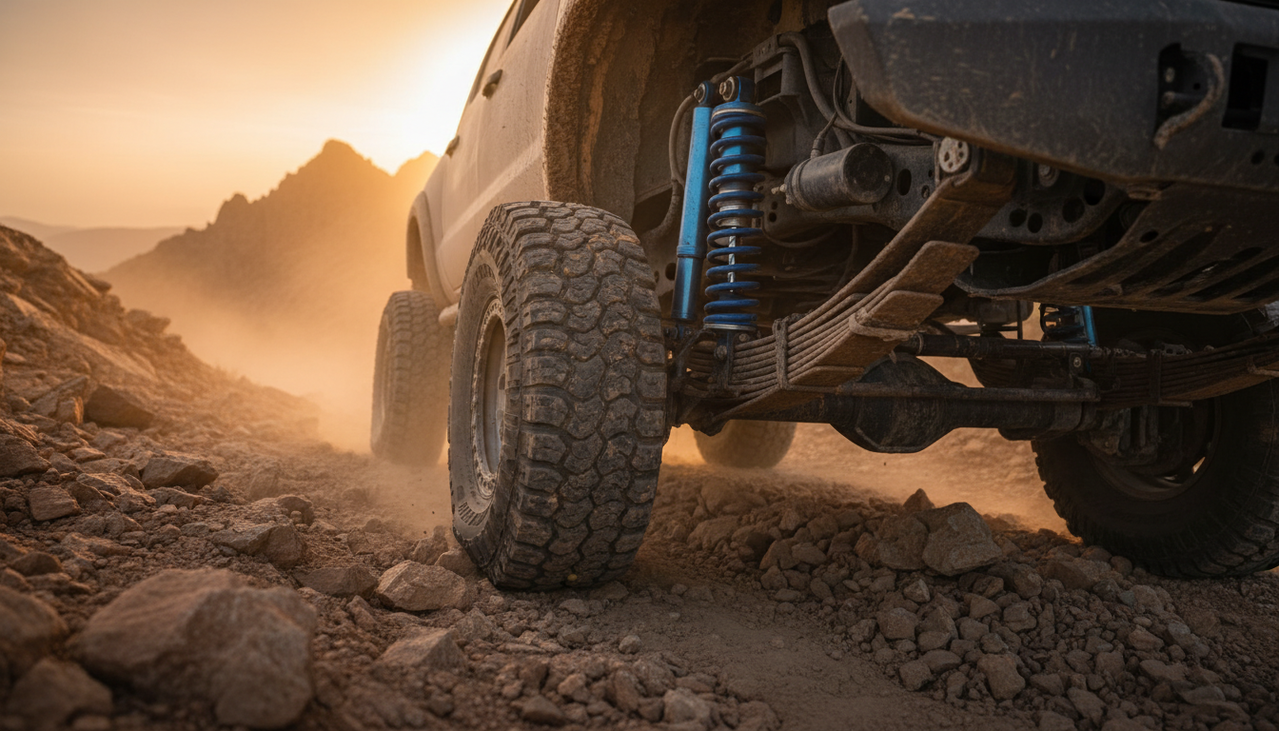
SUSPENSION GUIDE
Suspension 101: Coilovers vs Leaf Springs
Everything you need to know about choosing the right suspension setup for your rig — from smooth-riding coilovers to heavy-duty leaf springs.

Off-Road Gear Guys Team
•
March 18, 2024
•
10 min read
Suspension 101: Coilovers vs Leaf Springs
Suspension is one of the most important — and most misunderstood — upgrades on any off-road rig. It's what keeps your tires planted, your ride controlled, and your body in one piece when the terrain turns nasty. Dial it in and the trail opens up. Get it wrong and every rock, rut, and washboard road punishes you for it.
Your suspension is the difference between conquering the trail and getting rattled off it.
This guide cuts through the confusion. We break down how coilovers and leaf springs actually work, the real pros and cons of each, and how to figure out which setup fits your vehicle, your budget, and the way you drive.
Coilovers vs Leaf Springs: How They Work
Coilovers
A coil spring wrapped around a shock absorber in a single unit. Coilovers let you dial in ride height and damping for a smoother ride both on-road and off. They're a favorite on IFS trucks, rock crawlers, and UTVs — but they cost more and are trickier to install.
Adjustable ride height & damping
Smoother on- and off-road ride
Pricier & more complex to install
Leaf Springs
Stacked steel leaves mounted longitudinally along the axle. Extremely durable and load-bearing, they're built for heavy towing and hauling — the go-to setup for rear truck axles. Simpler and cheaper, but with a stiffer ride and less small-bump compliance.
Rugged, high load-bearing capacity
Ideal for towing & rear axles
Simpler, cheaper & stiffer ride
Choosing Between Coilovers & Leaf Springs
Primary Use
Daily driving and rock crawling reward the flex and articulation of coilovers, while towing and hauling heavy loads favor the load-carrying strength of leaf springs.
Budget
Leaf springs are typically cheaper and simpler, while a quality coilover setup costs more up front but rewards you with greater tunability.
Ride Comfort
Coilovers generally deliver a smoother, more adjustable ride, whereas leaf springs can feel stiffer — especially when the rig is running unloaded.
Install & Maintenance
Leaf springs are straightforward to bolt in and low-maintenance, while coilovers involve more components and occasional adjustment to dial them in.
Vehicle Type
Independent front suspension (IFS) and solid-axle rigs have different needs — confirm which system fits your platform before you commit to a setup.
Frequently Asked Questions
Absolutely — it's a common truck setup. Coilovers up front give you control and adjustability, while leaf springs in the rear handle loads and towing.
It varies by manufacturer. Some allow bolt-on suspension upgrades, others don't. Always check your warranty terms before you install.
Inspect them regularly and replace at the first signs of sagging or cracking — typically every 60,000 to 100,000 miles depending on how hard you run them.
It comes down to your terrain and comfort priorities. Want adjustable ride height and a dialed-in ride? They're worth it. For basic commuting alone, maybe not.
Only within limits. Unlike coilovers, leaf springs usually need add-a-leafs or a different spring pack to change ride height.
SUSPENSION 101
Ready to Upgrade Your Suspension?
Whether you're chasing a smoother ride or serious articulation, we've got you covered. Shop coilovers and leaf spring kits built for the trail at Off-Road Gear Guys.
Shop Suspension Kits